
Biochemistry
Biochemistry is the chemistry of life
Biochemistry is a broad science that studies the molecules and chemistry of life. It focuses on the structure, properties, and interactions of molecules such as proteins, nucleic acids, sugars, and lipids.
As a Biochemistry major you will:
- Explore how life works at the molecular level using quantitative approaches grounded in chemistry, physics, and math
- Analyze how the various functions of living cells and biological processes operate at the molecular level
- Discover the connections between biochemistry and current issues, such as understanding disease and finding cures or improving agriculture and the production of food and biofuels
Career Paths
Biochemistry graduates are prepared for careers in science and science-related fields, such as biotechnology, pharmaceuticals, academia, science communications, policy, and more.
Here are just a few examples of what our biochemistry graduates are doing with their careers:
What CALS alumni do:
Pharmacist
Physician
Dentist
Cardiologist
Where CALS alumni work:
National Institute of Health
UW Health
Medical College of Wisconsin
SSM Health
What CALS alumni do:
Production Scientist
Clinical Researcher
Analytical Coordinator
Chemist
Research Specialist
Scientist
Where CALS alumni work:
Abbvie
Lapcorp
Promega
Exact Sciences
Thermo Fisher
Catalent
What CALS alumni do:
Research Associate
Production Scientist
Production Scientist
Clinical Researcher
Professor
Chemist
Where CALS alumni work:
National Institute of Health
Epic
GE
Covance
Promega
Medical College of Wisconsin
Your CALS Experience

Learn through hands-on research
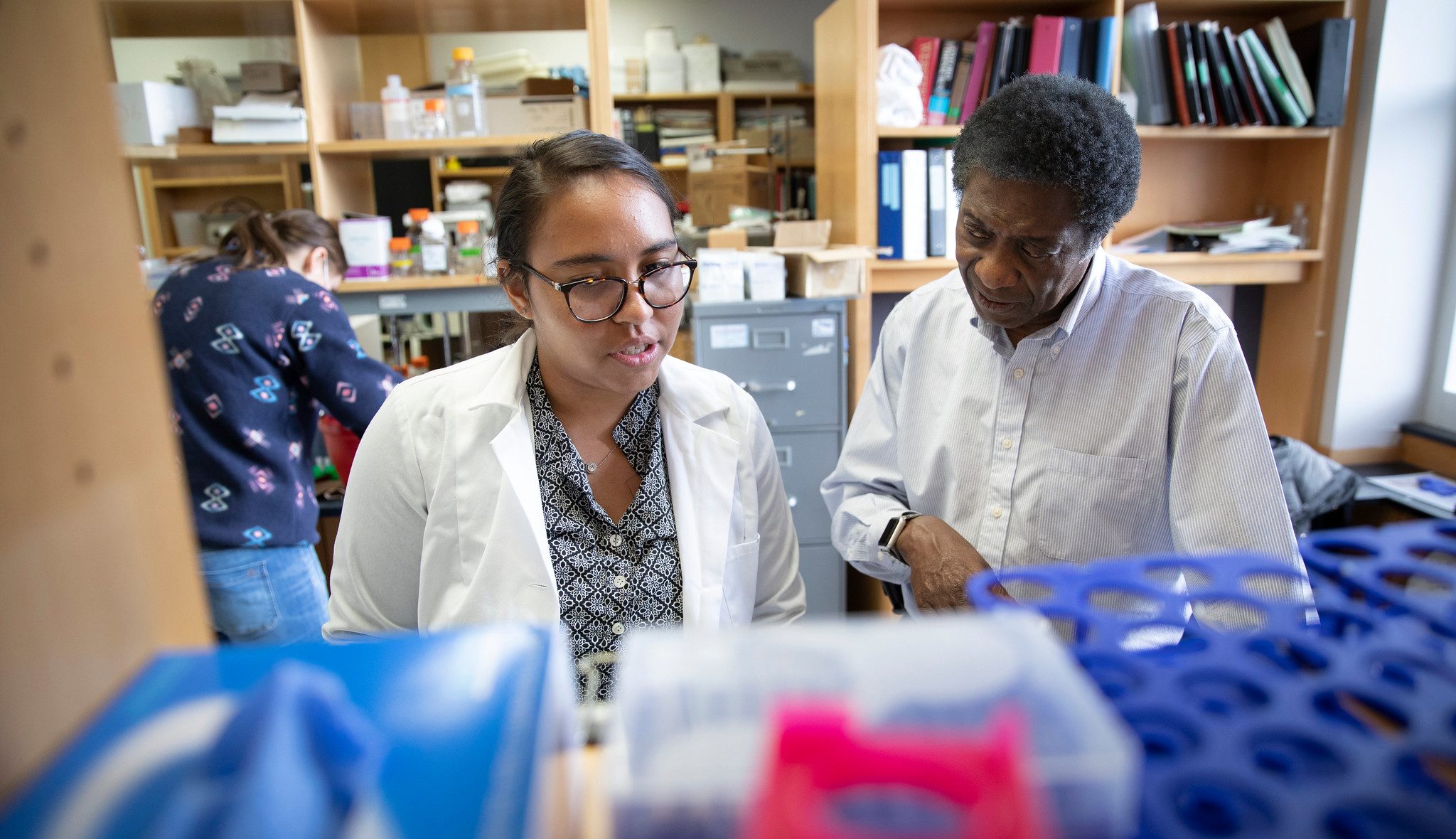
Join the Biochemistry Scholars Program where you’ll be introduced to biochemistry research projects. Engage in undergraduate research to develop real-world laboratory skills, practice public speaking, and build your network on campus. You’ll learn first-hand from faculty and staff and investigate solutions to real-world problems.
Biochemistry majors are invited to apply to the Biochemistry Scholars Program during their second semester and will begin research in the fall of the following year.
You can also conduct independent research in faculty labs all across the UW–Madison campus. Additionally, many students have the opportunity to present their research at conferences and publish their research in scientific journals.
64%
Students who participate in research
100%
Graduates who say they gained important scientific and communication skills in the program
100%
Students who take an Honors course
Advisor & Contact Information
Advisors can answer your questions, help you create a degree plan that meets your personal and professional goals, and connect you to resources across the UW–Madison campus.
Incoming students should reach out to CALS Academic Affairs to direct your questions. Current UW–Madison students should schedule with their assigned advisor using Starfish.
CALS Academic Affairs
116 Agricultural Hall
1450 Linden Dr., Madison, WI 53706
academicaffairs@cals.wisc.edu
(608) 262-3003
Biochemistry Undergraduate Advising
1315 Biochemical Sciences Building
440 Henry Mall, Madison, WI 53706
